Showing posts with label foraging. Show all posts

Tuesday, July 8, 2014

Wild Edibles - Part 3


I hope you were encouraged to see what plants were growing in your back yard.  Looking through this new lens of foraged foods is pretty exciting.  

Pictured below, among ALL that poison ivy, are a few leaves of dandelions.  I think most people know they are edible, but in case you forgot, those pretty yellow, flowering weeds in your yard can also be food.  The leaves are best eaten before the plant flowers, but the flowers are also good battered and fried.  I've also used the petals as an addition to zucchini bread and in cookies, just because it's fun to eat flowers.

 This is called Dock.  Plants found closer to water are known to be less bitter.  Steam slightly and use like grape leaves.  It's a great green to wrap foods in for cooking.  It's rich in protein and vitamin A.

 This is a Green Brier - these grow all over our fence and I hate them.  They can be invasive.  However, the very tendril tips look like a pea plant, and guess what? They taste like peas too.  The root-stocks of many species can be used as a gelatin substitute.


 This beautiful flower is from a Black Locust tree.  Oddly, only the flowers are edible on this plant.  They taste and smell like honeysuckle.  It seemed like such a treat to eat one after tasting so many bitter or zingy plants.

 We found Wild Grape Vine.  The leaves are edible. You can boil and eat them or use them for wrapping and cooking foods.  Wild grapes are also edible.

Heading up the hill, Santiago the Turkey still touring with us.
 The last plant on our foraging expedition is Mallow.  I've seen these pretty plants before - perhaps you have to?  You can eat the tiny leaves.  Each plant bears a few pods.  When opened, they reveal the below. These can be eaten just as they are or pickled and used like capers (much safer than the marsh marigold). You can also eat the root of this plant.

We headed to the tee-pee and fire circle to eat a salad of foraged greens mixed with some spring lettuce mix.

We have owned this book for quite a while, but I just looked at it with slight interest.  Taking this class definitely gave me the push and confidence I needed to go exploring on my own.  Knowledge is soon forgotten if not practiced, so I plan on keeping up with this whole learning thing.  

Saturday, July 5, 2014

Wild Edibles - Part 2


Continuing on our forage walk, with Santiago the Turkey in tow, we also learned about these plants:


 Toothwort - this plant has a whiteish root-stock that can be used in place of horseradish, just mix with vinegar and a pinch of salt.


 Jewel Weed is great for soothing poison ivy or the sting from nettles.  The stem has a liquid similar to aloe which can be directly applied to the skin.  Not surprisingly, this plant is normally found close to poison ivy - our Creator's way of giving a helping hand.  The leaves of this plant are also edible and nutritious.  Cook them up and add them to quiche for a delicious dinner.

Wild onions - this plant is getting ready to flower so the stem was a bit woody.  On younger plants, you can use the stem just like spring onions or chives.


This is another plant that grows in our yard that I just assumed was a worthless weed.  This is actually field mustard.  Who'd a thought, right?  This plant has a lot of nutritional value: vitamins A, B1, B2, and C. Mix the leaves with other greens to spice up a salad, saute like spinach, or add it when making pesto for a little zing.


This is Sassafras, which our family is very familiar with.  We make home made sarsaparilla, which is the most amazing, refreshing drink.  You can also use the root in teas as well.  The leaves are dried and used to flavor gumbo - which was new information for me.

These plants might be a little less common for your backyard, but we have mustard and sassafras growing on our property.  If you have any overgrown spaces, you may be pleasantly surprised at what you find.

Thursday, July 3, 2014

Wild Edibles - Part 1


I recently discovered the North American Bushcraft School.  This is an amazing local organization dedicated to keeping ancestral knowledge alive.  The farm is situated on 130 remote acres, it was beautiful country.  I signed us up for a class in foraging and headed over to get some hands on experience from a few experts.

 We were greeted by Santiago the Turkey - a farm pet that followed us around the entire time just like a dog would.  He was quite friendly.  It was a hoot to have him walking along with us.

 Our first foraged find was Purslane - a woodland succulent.  It can be eaten raw and is a great addition to salads.

 These heart shaped leaves (not to be mistaken with clover) - is Wood Sorrel.  It gets small, yellow flowers.  It tastes a bit sour and has a very nice lemon flavor.  This was one of my favorites.  It can be eaten raw. They are also good to steep for 10 min in hot water, add a bit of honey, then chill for a refreshing drink.  This plant is rich in vitamin C.


 These silly plants which are all over my back yard (and were always considered a weed in my book) happen to be Plantains.  The rounded leaf is a Common Plantain and the slender one is called Seaside Plantain.  When young, they can be picked to eat in salads or steamed/boiled and served with butter.  As they grow, the leaves become tough and stringy, but they are still useful.  They are used to make spit poultices (chew them up and spit them out) to be used on bug bites for instant relief.


This fuzzy leaf is called Mullein.  We discussed the benefits of having this around to use in place of toilet paper if ever stranded, but it also has other benefits as well.  These are great to dry and use in teas, specifically for chest colds as it is an expectorant.  You can also steep them in hot water to make a steam vapor for inhaling to eliminate a chest cold.

I bet if you run out to your backyard, you can find at least 1 of these plants.

*They did note the importance of teaching your kids, specifically little ones, that you should always ask an adult before picking and eating any plant - just to be sure.  Also, you should never gather plants directly beside a roadway due to weed spraying and car pollution.

This is a fun activity to do with your family.  You can literally make a salad from backyard or a quick neighborhood stroll.

Tuesday, June 24, 2014

Exploring the Woods

I love finding secret streams off the beaten path full of emerald gems of green, green moss.  Dappled sunlight streaming down, creates a magical fairy land forest.


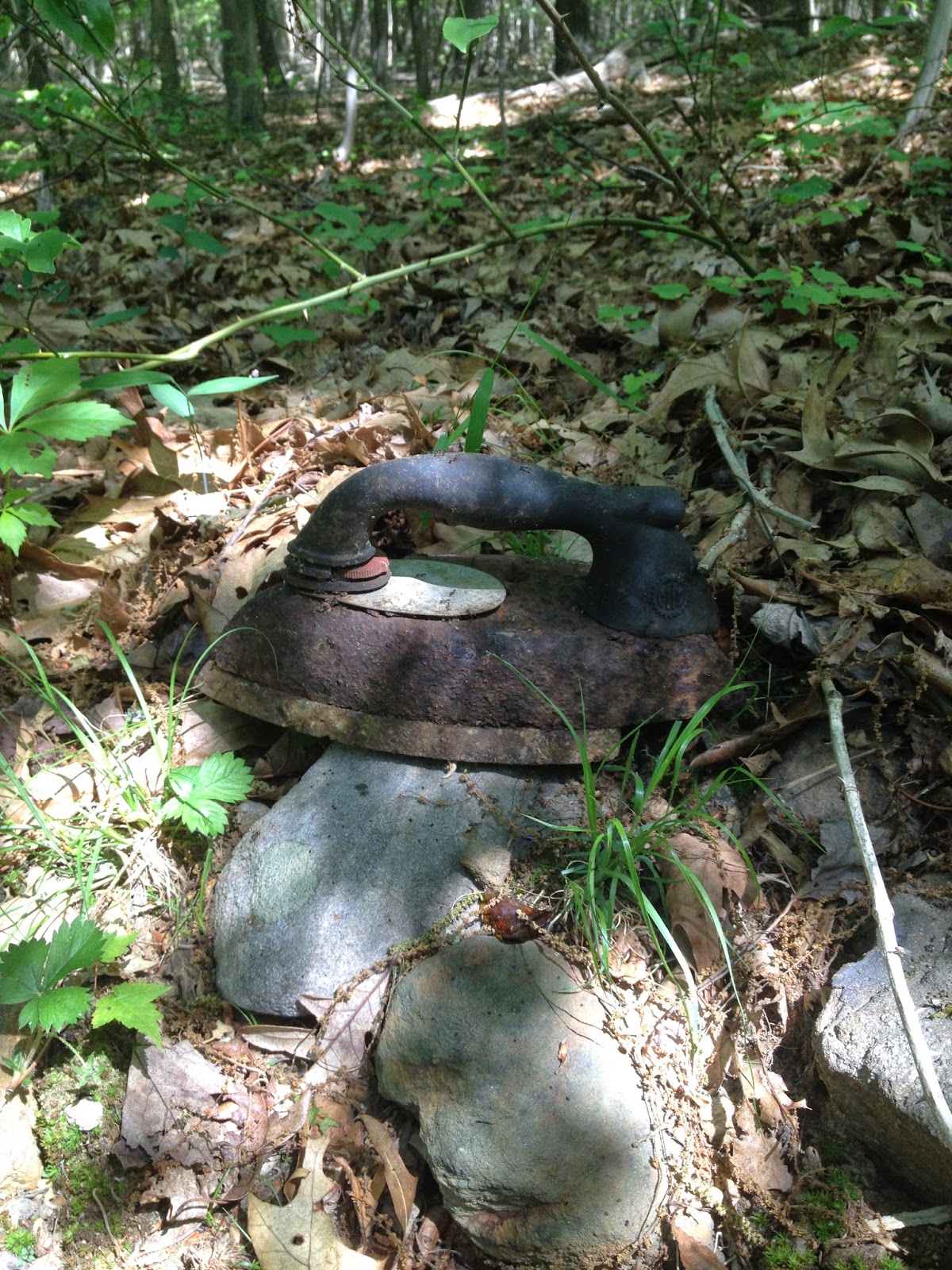
 We stumbled upon this old iron - it was full of fire ants when we picked it up to inspect it.  It was promptly thrown down and left to be admired by others and to continue providing a retreat for said ants.

This swampy area is our favorite spot to forage cattails.  They are gathered in the spring when they are about the size of leeks - they look a lot like leeks too.  Just grab them around the base and pull gently.  Cut the tops off and peel the first layer of leaves off the plant.  What is left is a white, tubular shoot that is quite edible.  
It tastes like a mild cucumber and perhaps a little "foresty".  You can find out more here.  Oh, it's also important to remember to wear shoes that can get wet and muddy!

If you are lucky enough to live close to a forest, don't take it for granted.  I am so blessed to have these gifts of trees and land at my fingertips.

Friday, May 30, 2014

Morel Season

This spring has been great for morels.  The season is short, only lasting a few weeks. My husband and son went foraging almost daily to pick these crazy mushrooms.  There are so many varieties that grow in our area.  They don't dry or store well which is why I think people are a bit crazy about them.  It's a once a year, spring treat.
After picking, we cut them in half longways, soak them in salt water, rinse and then...
we eat them lightly breaded and fried or sauteed in quiches, on pizza, in cream of mushroom soup, etc. You can't eat this mushroom raw, it must be cooked.
Admittedly, this isn't my favorite mushroom.  I prefer chanterelles ,but I will take what nature gives us and enjoy these for the season.

*Note, when picking mushrooms, an old onion bag is perfect to use.  You should always use something that allows the spores to fall from the mushrooms as you walk, allowing them to reproduce the following year.

Last year  was not as fruitful - we only found a few mushrooms.